Australasia,
three countries, one ocean world.
From the Whitsundays inside Australia’s Great Barrier Reef to the fiords of New Zealand’s Fiordland and the coral seas of Papua New Guinea’s Bismarck — Australasia spans the Pacific’s most diverse range of charter conditions across three countries and thousands of miles of coastline.
3
countries — Australia, New Zealand, Papua New Guinea
2,300km
Great Barrier Reef — world’s largest coral reef system
74
islands in the Whitsundays group
No. 1
visited natural attraction in New Zealand — Milford Sound
THE CHARTER CASE FOR AUSTRALASIA
Three countries, three completely different charter worlds
Australasia is unique among Oceania’s five charter regions in that it spans three distinct countries — each with its own sailing culture, marine environment, and charter infrastructure. Australia brings the Whitsundays, the world’s most famous island sailing ground, and the Great Barrier Reef, the largest coral reef system on earth. New Zealand brings Milford Sound, the Marlborough Sounds, and the Bay of Islands — dramatic, temperate sailing unlike anything else in the Pacific. Papua New Guinea brings Kimbe Bay, Milne Bay, and the Bismarck Sea — some of the least-visited but most biodiverse diving waters in the world.
Together they form the most geographically and climatically diverse charter region in Oceania. A charterer could spend a week in the Whitsundays, fly to Queenstown, sail the Marlborough Sounds, and connect to a Port Moresby liveaboard — all within a single Australasia itinerary. Few regions anywhere in the world offer that range.
WHAT THE WATER OFFERS
Charter types across Australasia
Six distinct charter experiences across three countries
01
Whitsundays Island Sailing
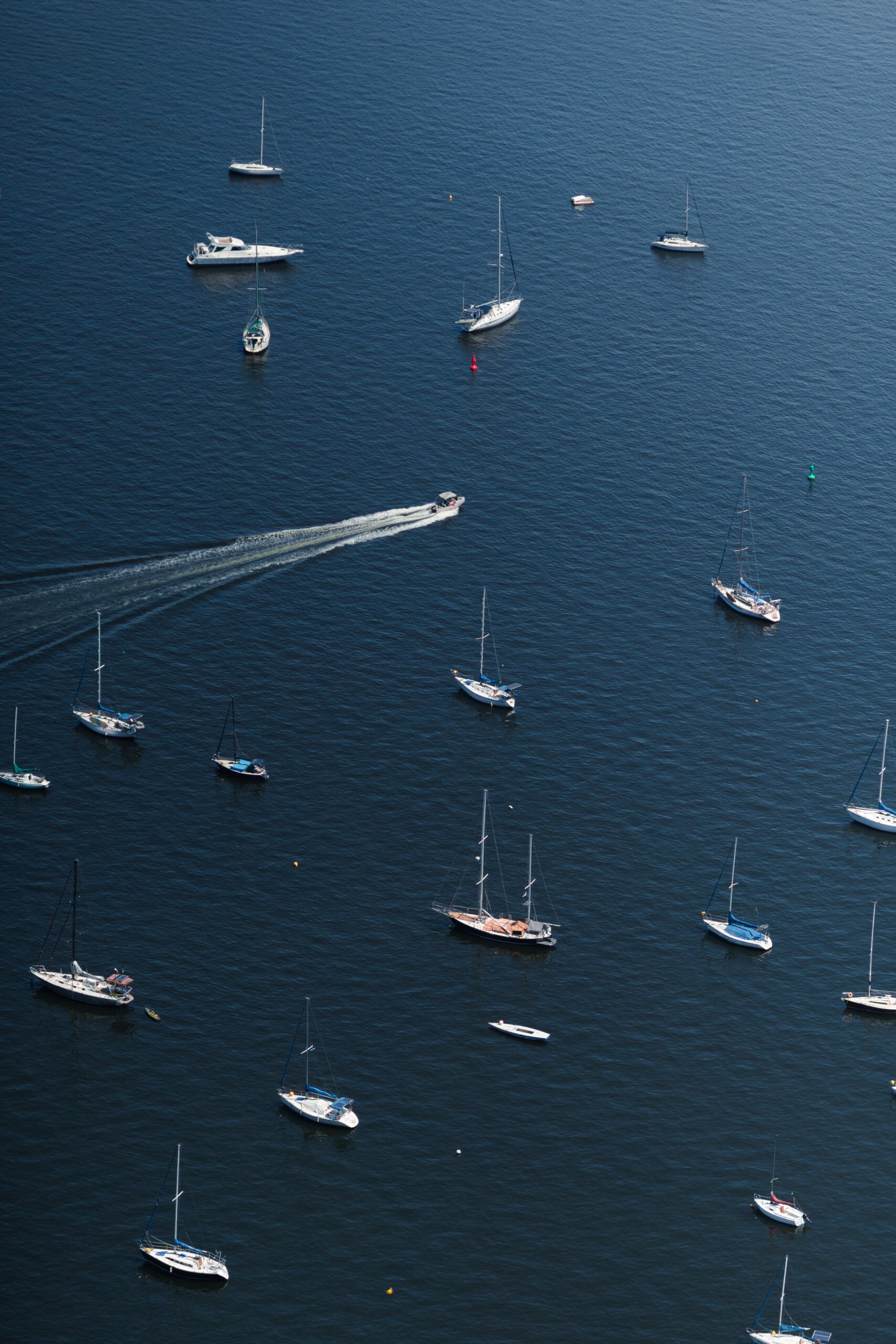
74 islands inside the Great Barrier Reef Marine Park — the Whitsundays is one of the world’s great sailing circuits. Airlie Beach is the charter hub; Whitehaven Beach, Hook Island, and Hamilton Island are the standard circuit. Bareboat and crewed options from most operators.
Airlie Beach base, QLD · Best: June–October
Browse Whitsundays sailing tours →02
Great Barrier Reef — Snorkeling & Diving
The world’s largest coral reef system — 2,300 kilometres of reef accessible by day charter from Cairns, Port Douglas, and the Whitsundays. Pontoon day trips, liveaboard dive charters, and snorkeling cruises operate year-round to the outer reef.
Cairns & Port Douglas, QLD · Year-round
Browse Great Barrier Reef tours →03
Fiordland Cruising — New Zealand
Milford Sound (Piopiotahi) — a UNESCO World Heritage fiord — is New Zealand’s most visited natural attraction. Day cruises, overnight cruises, and kayak charters explore the fiord’s sheer 1,200-metre walls, Stirling and Lady Bowen Falls, and Mitre Peak.
Milford Sound, Fiordland NZ · Year-round
Browse Milford Sound cruises →04
Sport Fishing — Australia
The Coral Sea and Great Barrier Reef waters hold world-class sport fishing — Black and Blue Marlin off Cairns and Port Douglas, Giant Trevally on the reef flats, and Spanish Mackerel in the Whitsundays. Game fishing tournaments run June through October.
Cairns, Whitsundays, QLD · June–October peak
Browse Whitsundays fishing charters →05
Bay of Islands & Hauraki Gulf — NZ
New Zealand’s Bay of Islands — 144 islands off the Northland coast — is the country’s most popular sailing destination. Dolphin watching, island-hopping, and sailing charters depart from Paihia and Russell. Auckland’s Hauraki Gulf adds Waiheke Island and the Coromandel.
Paihia & Russell, Northland NZ · October–April
06
Liveaboard Diving — Papua New Guinea
Kimbe Bay in West New Britain holds extraordinary biodiversity — over 860 coral species and 1,000 fish species in a single bay. Milne Bay and the Bismarck Sea add WWII wreck diving to the mix. Liveaboard charters are the standard format for PNG diving.
Kimbe Bay & Milne Bay, PNG · April–November
COUNTRY BY COUNTRY
Where to charter in Australasia
Australia, New Zealand, and Papua New Guinea — each a distinct charter world
Australia
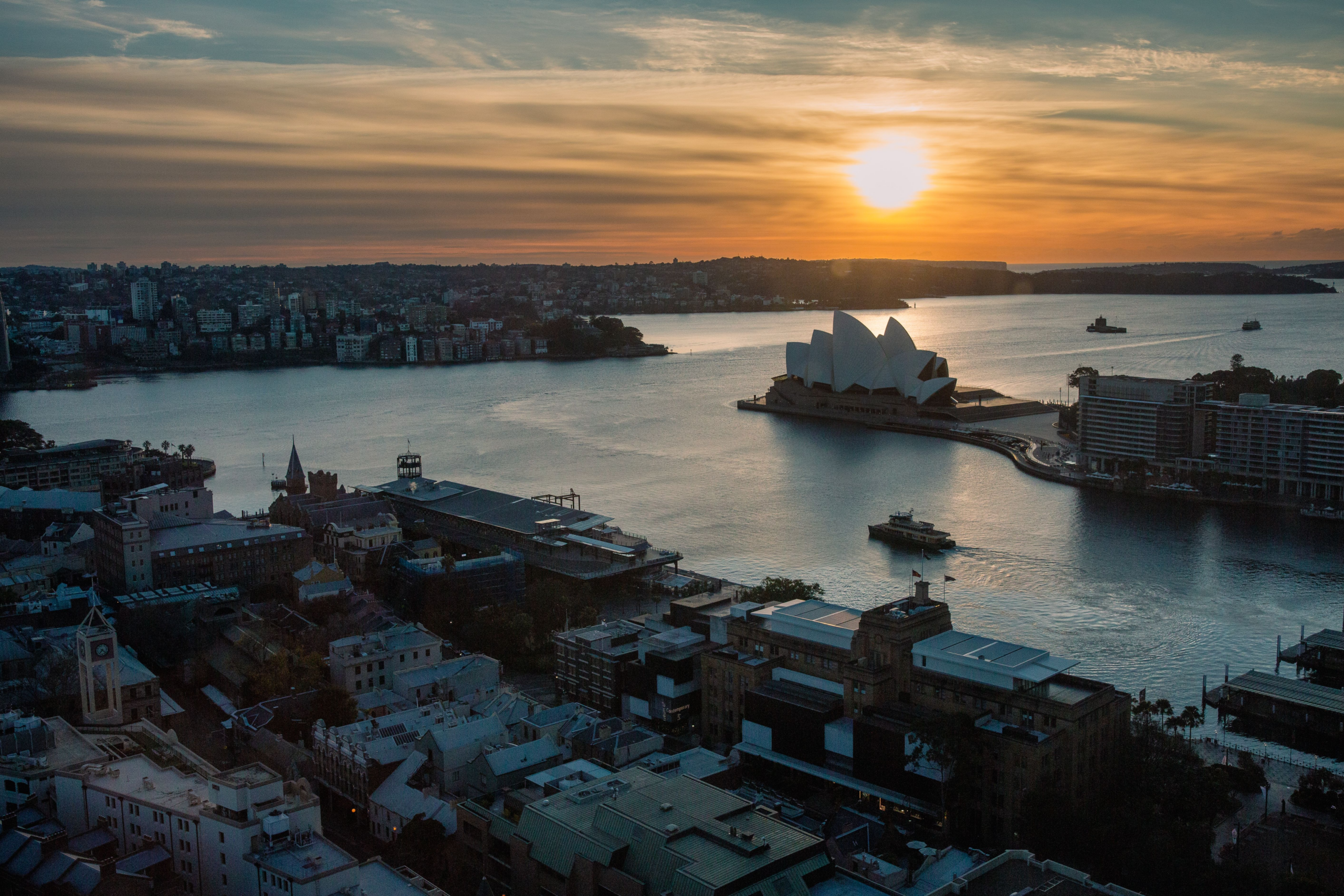
The Whitsundays, Great Barrier Reef, Sydney Harbour, and Tasmania
The Whitsundays — Australia’s charter capital
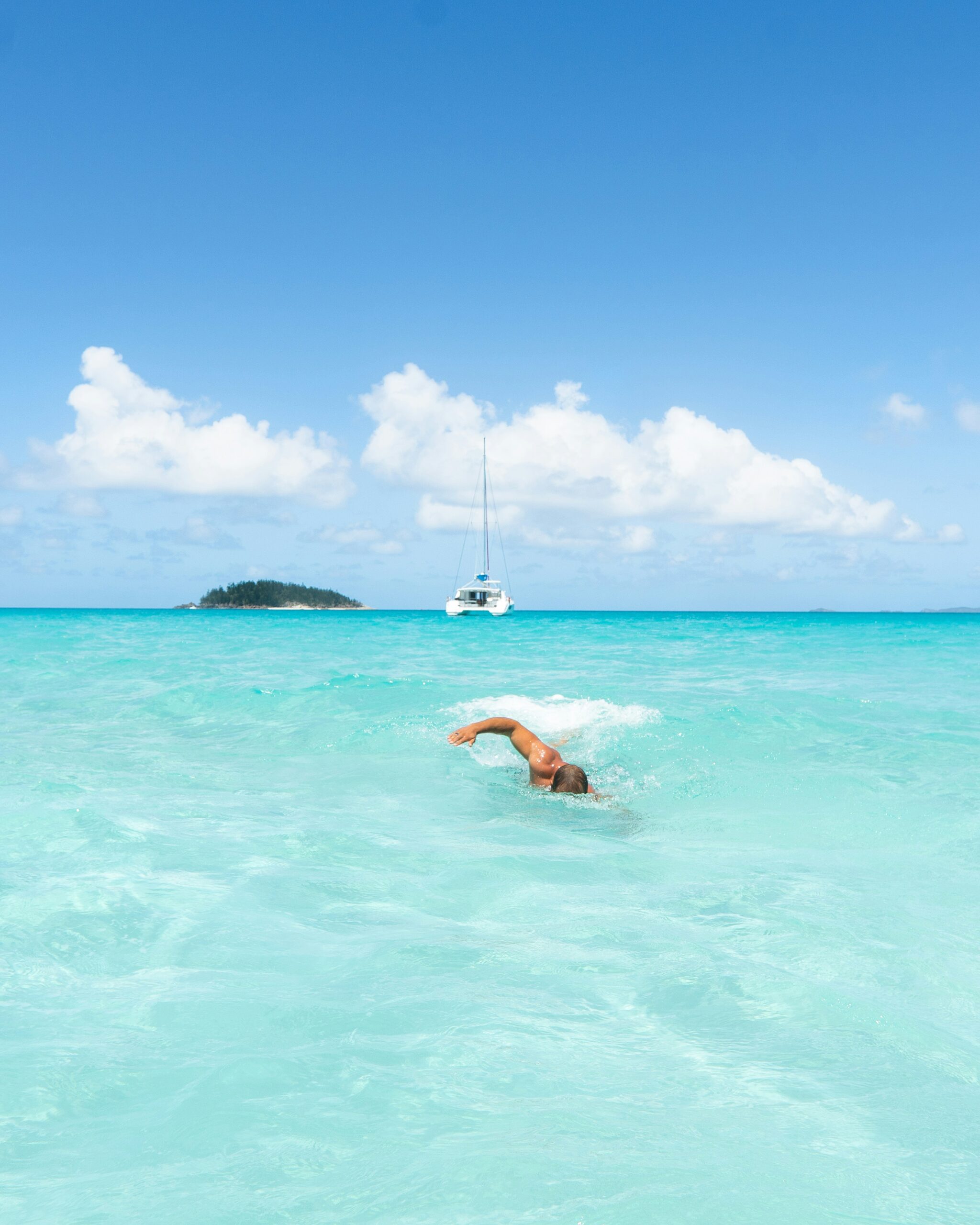
74 islands strung between the Queensland coast and the Great Barrier Reef — the Whitsundays is one of the world’s great sailing grounds and Australia’s most popular charter destination. Airlie Beach is the hub, with a large fleet of bareboat and crewed charter vessels. The sailing circuit — Hook Island, Hayman Island, Hamilton Island, Whitehaven Beach — takes most charterers five to seven days to complete properly.
Whitehaven Beach — nine kilometres of 98% pure silica sand on Whitsunday Island — is consistently voted one of Australia’s and the world’s top beaches, and is accessible only by boat or seaplane. The Hill Inlet lookout at its northern end, where tidal patterns create shifting white and turquoise sand patterns, is one of the most photographed locations in the country. Hamilton Island Race Week in August is one of the largest keelboat regattas in the Asia-Pacific.
The Great Barrier Reef — 2,300km of living reef
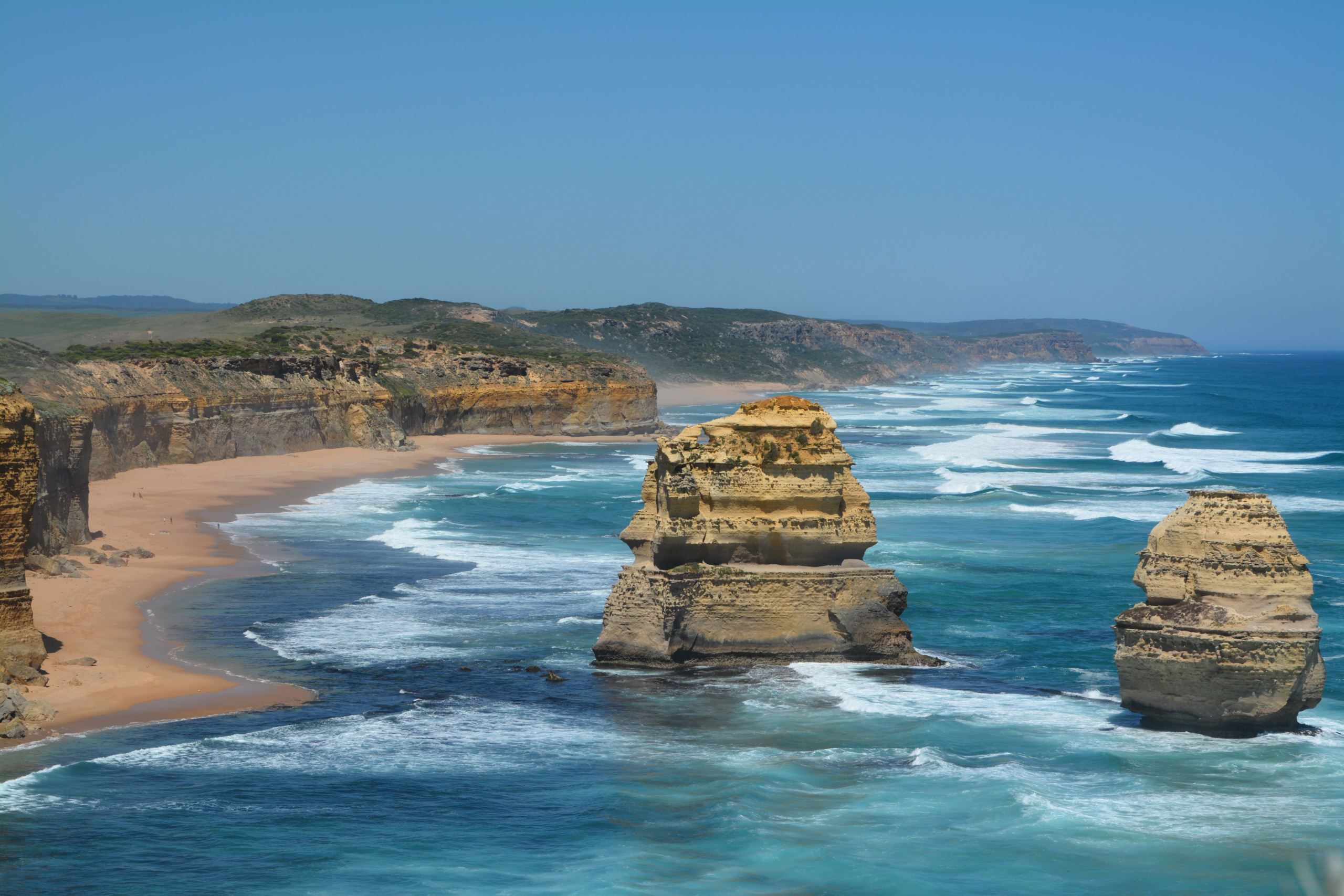
The Great Barrier Reef Marine Park stretches 2,300 kilometres along Queensland’s coast — the largest coral reef system on earth and a UNESCO World Heritage Site since 1981. From Cairns and Port Douglas, day charter vessels carry snorkelers and divers to the outer reef in 90 minutes. Liveaboard dive charters allow extended time on the ribbon reefs, Cod Hole, and Osprey Reef — some of the Great Barrier Reef’s most spectacular sections.
The Great Barrier Reef Marine Park Authority (GBRMPA) manages all charter activity within the park. Commercial charter vessels must hold a Tourism Operators permit, and certain reef areas require a Designated Anchorage permit. Your operator will handle all compliance — but it’s worth understanding that the permit system exists to protect the reef, not to restrict access.
Tasmania — Australia’s wild southern frontier
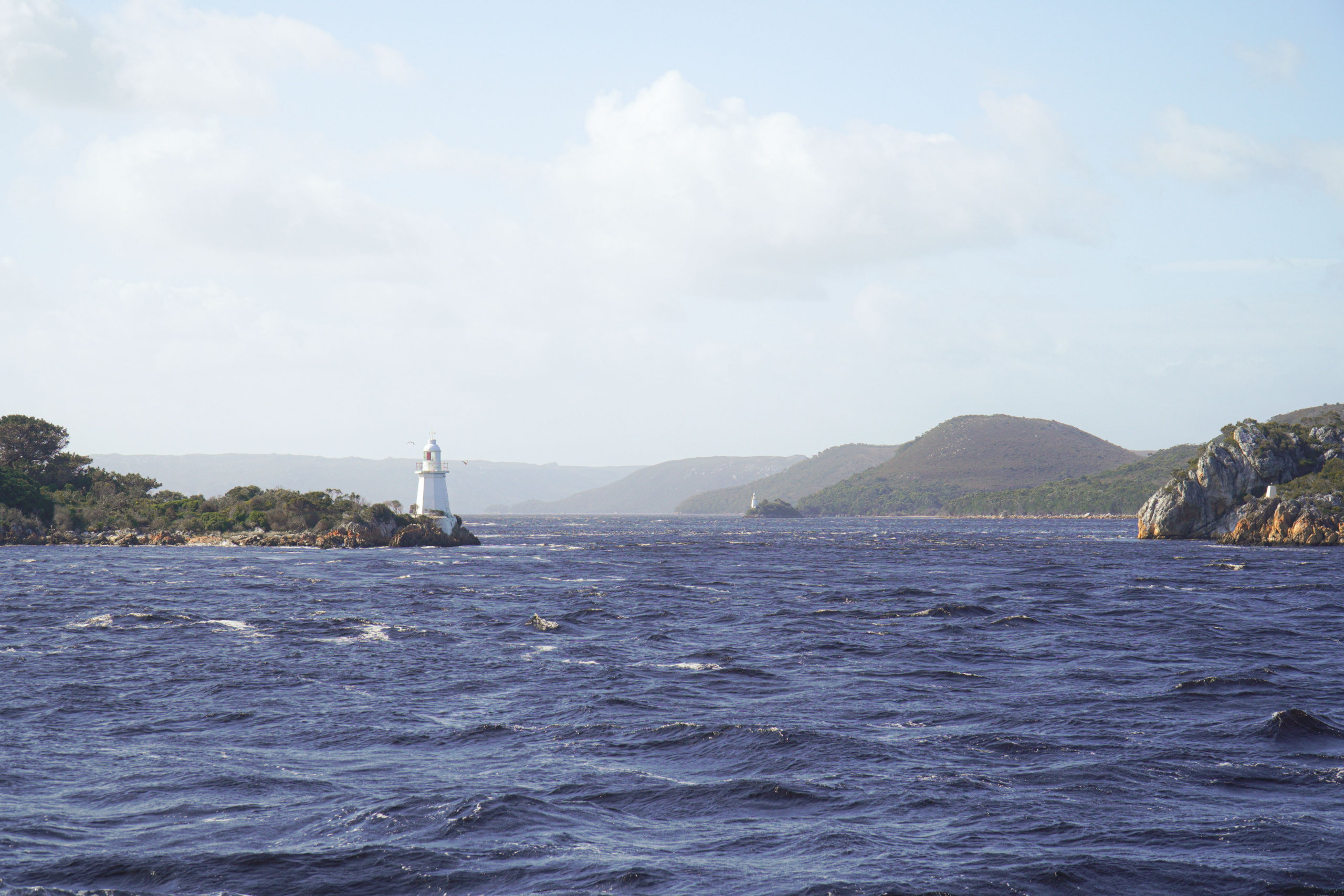
Tasmania sits at the southern edge of Australia’s charter world — a rugged island state with a sailing environment completely unlike Queensland’s tropical waters. The D’Entrecasteaux Channel, the Huon Estuary, and the Gordon River in the remote southwest offer dramatic wilderness sailing: ancient Huon pine forests, clean Southern Ocean air, and an almost total absence of other vessels.
Hobart is the finish line for the Sydney to Hobart Yacht Race — one of the world’s great ocean races, run annually on Boxing Day. The spectacle of the fleet arriving in Hobart’s Constitution Dock draws tens of thousands of spectators and is a significant event in Australian sailing culture. Charter day trips from Hobart’s Sullivan’s Cove explore the harbour and the Derwent River, while multi-day charters reach Port Arthur, Freycinet Peninsula, and the remote southwest wilderness coast.
New Zealand
Milford Sound, Bay of Islands, Marlborough Sounds, and the Hauraki Gulf
Milford Sound — New Zealand’s defining charter experience
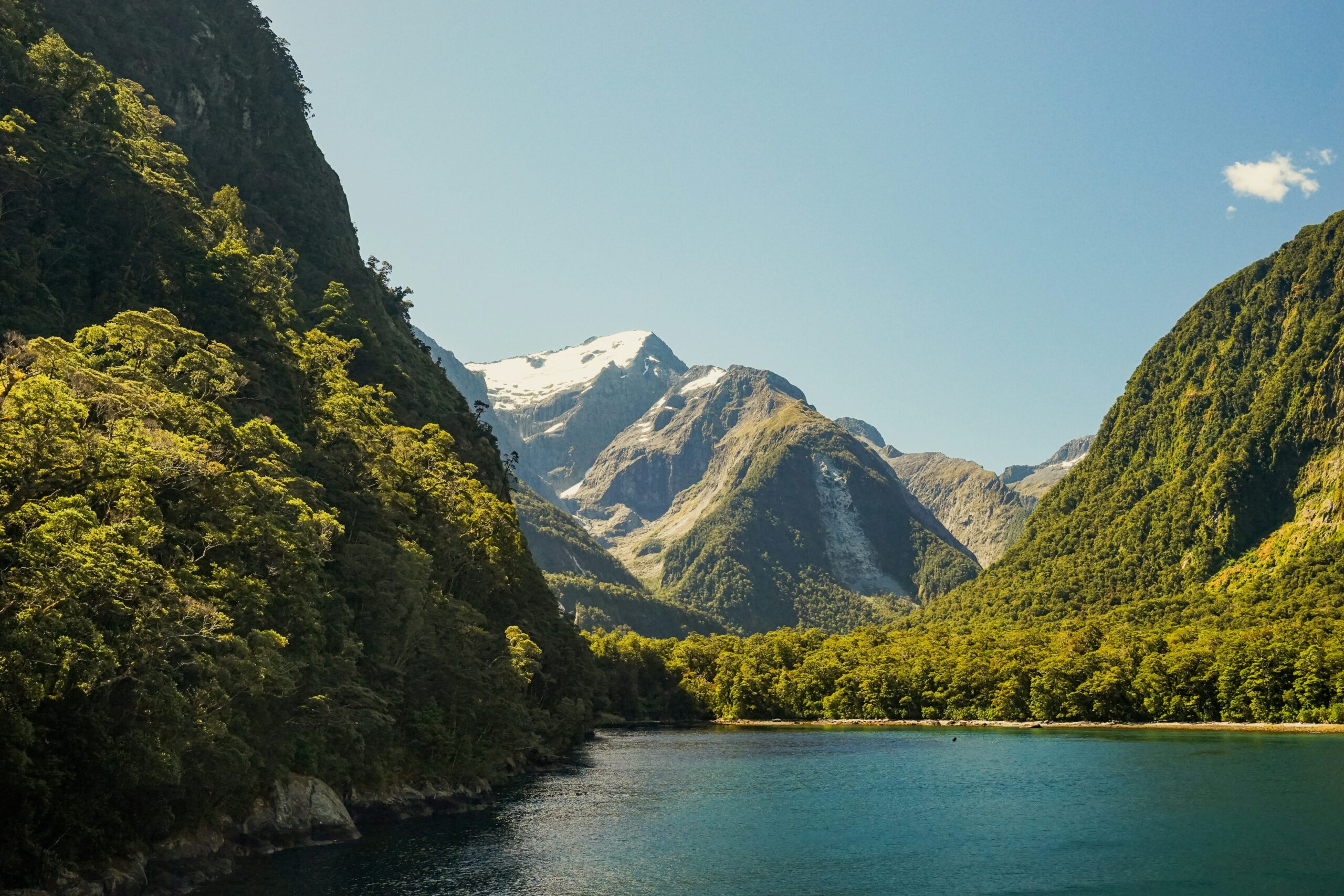
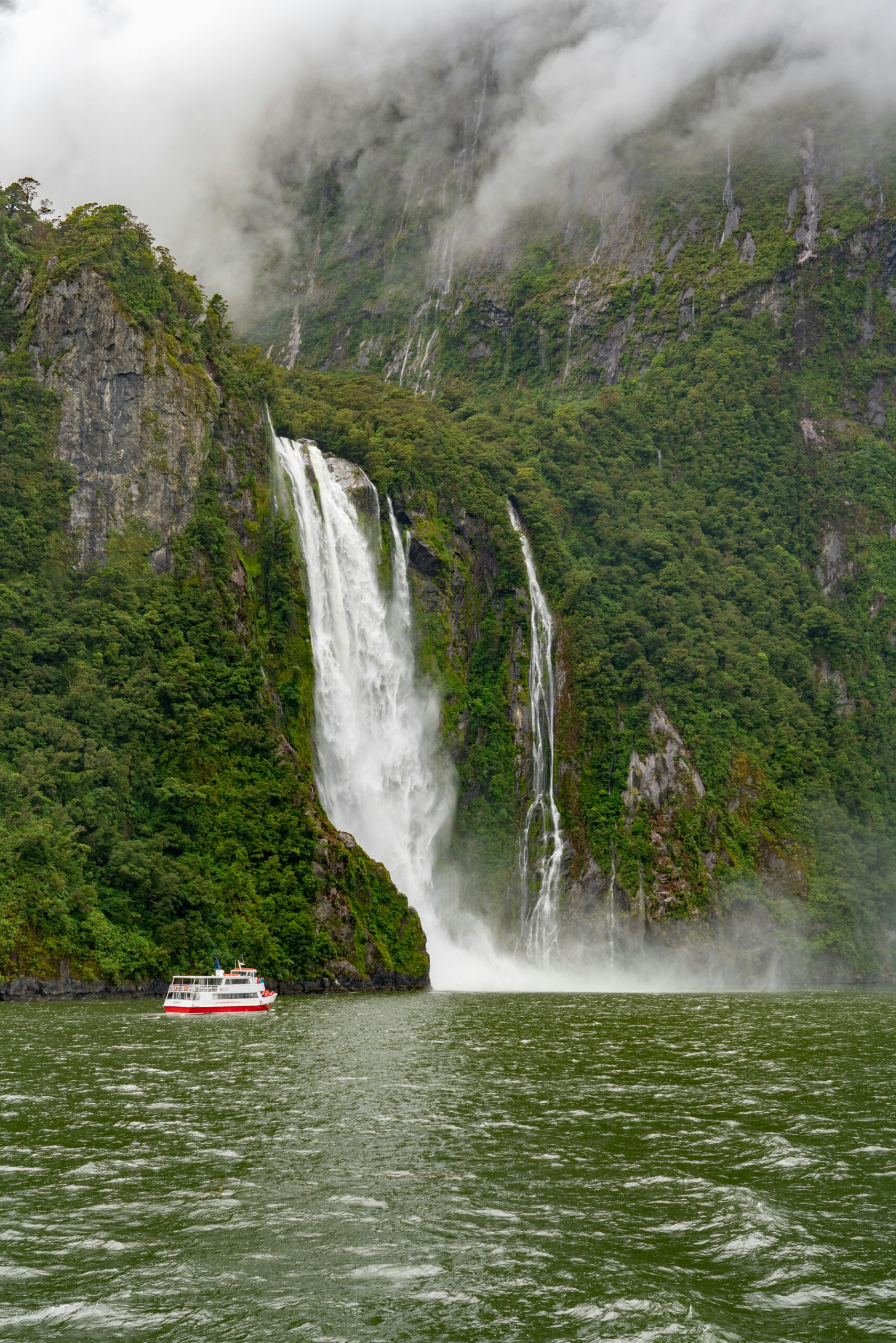
Milford Sound — Piopiotahi in Māori — is a 15-kilometre fiord on New Zealand’s south coast, carved by glaciers and flanked by 1,200-metre granite walls draped in waterfalls. It is the most visited natural attraction in New Zealand and one of the world’s great boat journeys. The permanent cloud that keeps the fiord wet year-round feeds Stirling Falls and Lady Bowen Falls — two of the fiord’s defining features — and supports a rare marine ecosystem where the freshwater layer on top of the salt creates conditions for deep-water species to live in the shallows.
Day cruises from the Milford Sound terminal carry most visitors. Overnight cruises — anchoring within the fiord — offer the experience away from the day crowds, with dawn mist, resident dolphins, and the occasional Fiordland crested penguin. Kayak charters explore the fiord’s margins. The nearby Doubtful Sound, accessible only by boat from Lake Manapouri, is larger, more remote, and even more dramatic — and sees a fraction of Milford’s visitor numbers.
Bay of Islands — where New Zealand sailing began
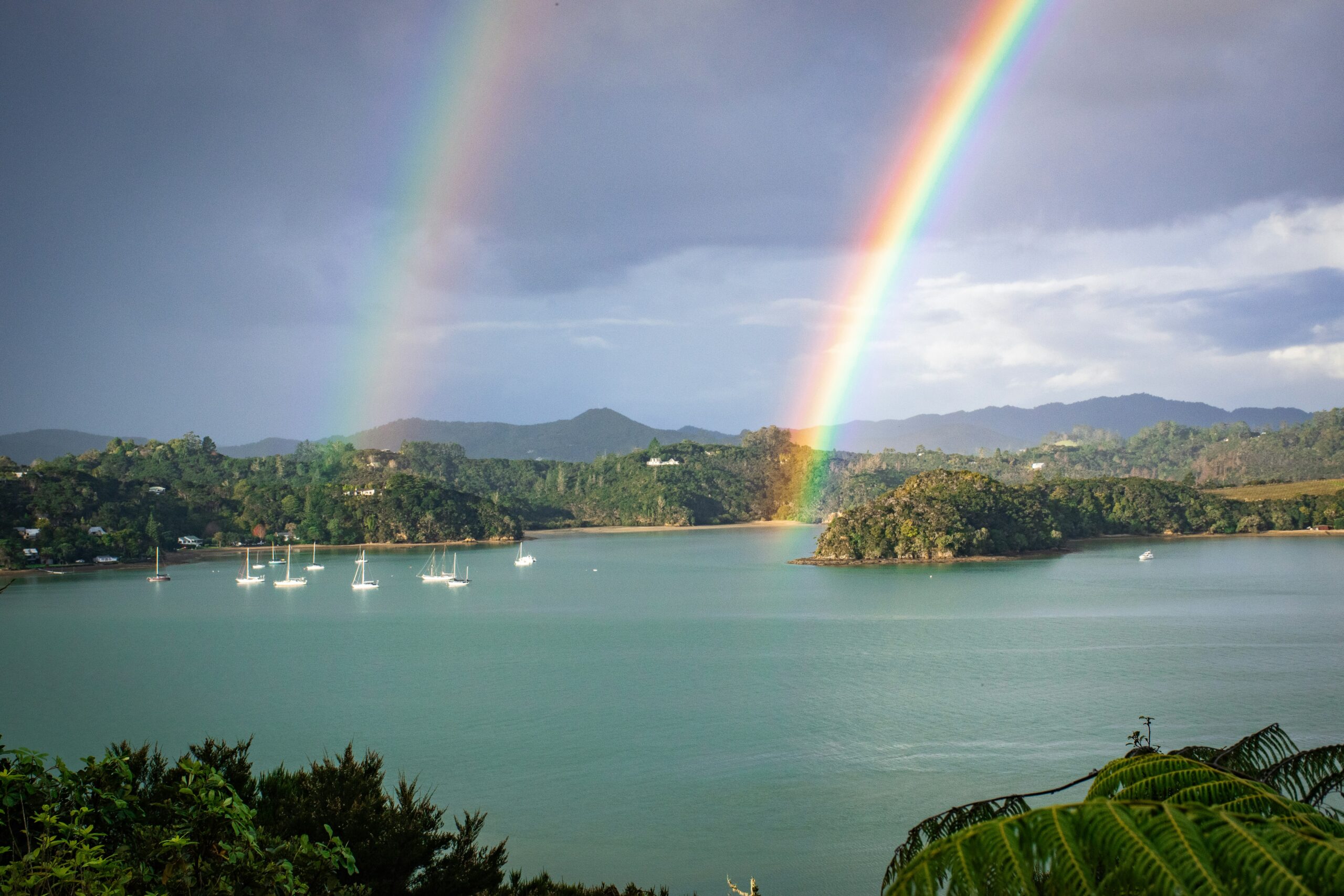
The Bay of Islands — 144 islands scattered across a protected bay on New Zealand’s northern Northland coast — is the country’s most popular sailing destination and its oldest colonial settlement. Paihia and Russell are the charter bases; the Waitangi Treaty Grounds, where New Zealand’s founding document was signed in 1840, sit on the bay’s western shore. The sailing here is accessible and enjoyable: sheltered water, manageable distances between anchorages, and consistent summer winds.
Dolphin watching — both common and bottlenose — runs year-round from the Bay of Islands, with encounter rates among the highest in New Zealand. The “Hole in the Rock” at Piercy Island on the bay’s eastern entrance is a signature boat trip, navigating through a sea arch in the right conditions. Game fishing for marlin runs November through April.
Marlborough Sounds — New Zealand’s inland sea
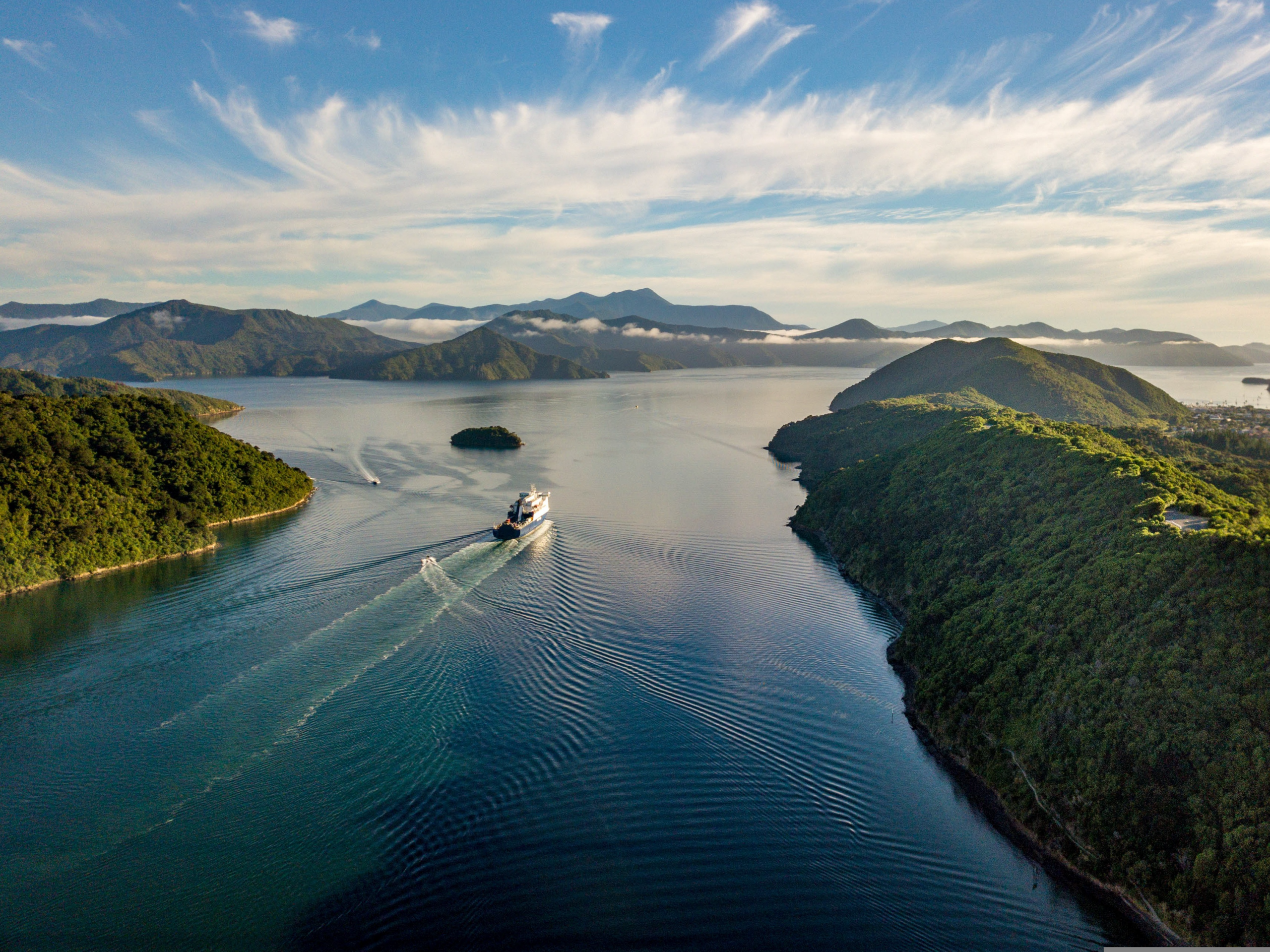
The Marlborough Sounds at the top of New Zealand’s South Island are a complex network of drowned river valleys — over 1,500 kilometres of coastline folded into an area you can cross in a day’s sail. Queen Charlotte Sound is the most popular cruising ground, with the Queen Charlotte Track walking route accessible by water taxi and charter for a multi-day hiking and sailing combination.
The Hauraki Gulf, Auckland’s backyard sailing ground, extends northeast from the city across 1.2 million hectares of protected waters. Waiheke Island — 35 minutes by ferry from Auckland, an hour by charter — is the Gulf’s most visited destination, combining wine, restaurants, and beautiful beaches. The Coromandel Peninsula and Great Barrier Island add remote cruising options within a day’s sail of New Zealand’s largest city.
Papua New Guinea
Kimbe Bay, Milne Bay, the Bismarck Sea, and Rabaul
Papua New Guinea — the Pacific’s great diving frontier
Papua New Guinea holds some of the most biologically diverse marine waters on earth. Kimbe Bay in West New Britain Province contains over 860 coral species and 1,000 fish species — more marine biodiversity in a single bay than in the entire Caribbean. Milne Bay in the east is widely considered one of the world’s top liveaboard dive destinations, with manta rays, whale sharks, dugongs, and extraordinary macro life alongside pristine coral walls.
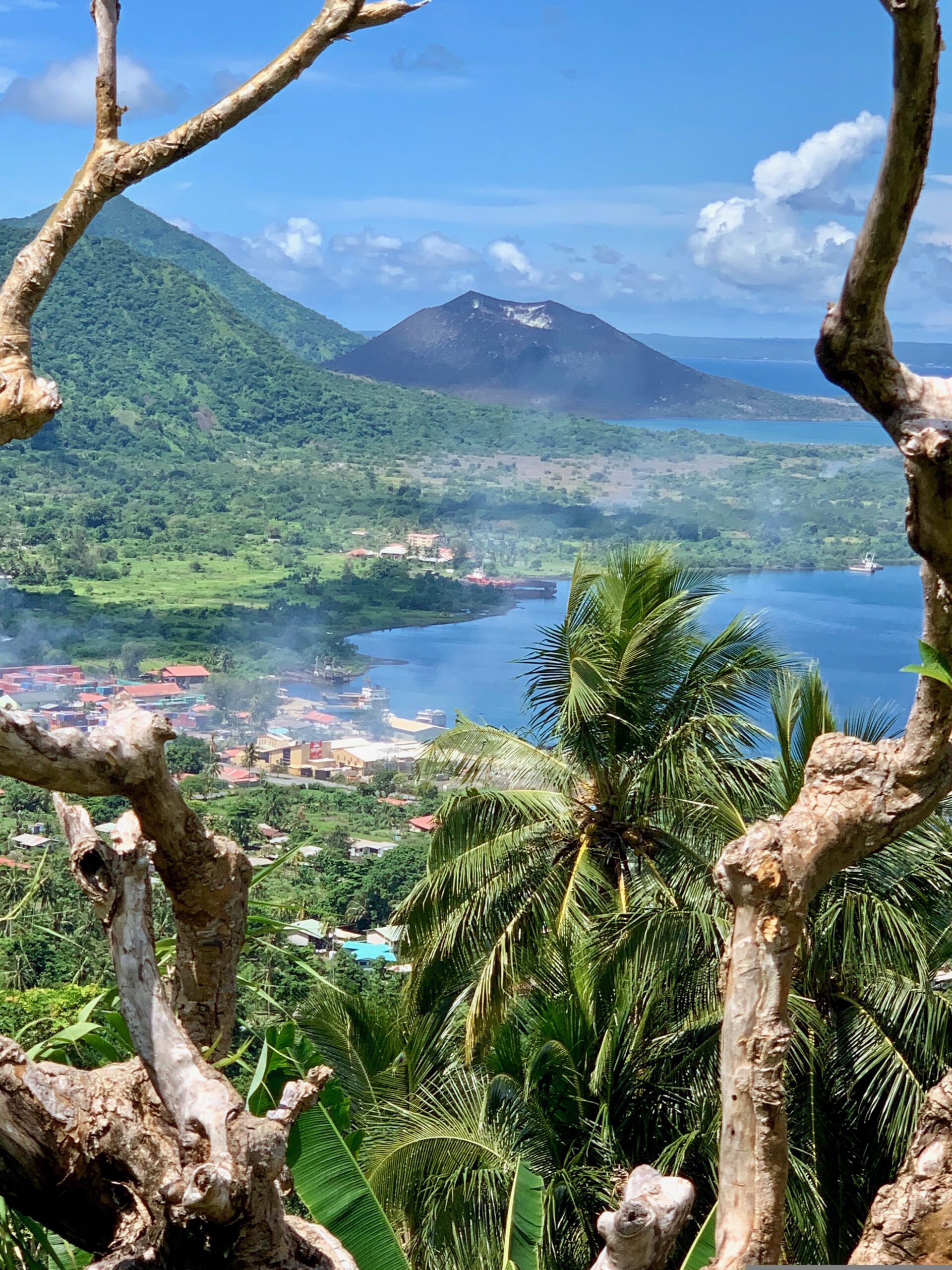
Rabaul — the former colonial capital devastated by the 1994 volcanic eruption — sits inside one of the world’s largest calderas, with active volcanoes visible from the harbour and Simpson Harbour holding a collection of WWII Japanese wrecks in shallow, warm water. PNG is not a high-volume tourism destination — infrastructure is limited, and liveaboard charters are almost always the right choice over land-based diving. For experienced divers willing to go off the beaten track, Papua New Guinea is without equal in the Pacific.
PLANNING YOUR TRIP
Season guide
Australasia’s charter calendar across three countries
| Month | Whitsundays / GBR | Tasmania | New Zealand | Papua New Guinea |
|---|---|---|---|---|
| January | Hot, humid — cyclone risk N QLD | Summer — excellent | Summer peak — Bay of Islands | Wet season — diving limited |
| February | Cyclone risk N QLD, Whitsundays OK | Summer — excellent | Peak — Bay of Islands | Wet season |
| March | Risk easing — good diving | Shoulder — cooling | Excellent — winds easing | Wet — transitional |
| April | Good — trades beginning | Autumn — good | Good — shoulder | Improving — SE trades begin |
| May | Excellent — SE trades steady | Good | Milford Sound — year-round | Good — diving season opens |
| June | Peak — best visibility | Cooler — good | Milford — year-round | Peak — Kimbe Bay |
| July | Peak — whale sharks GBR | Winter — cold but clear | Milford — year-round | Peak |
| August | Peak — Hamilton Island Race Week | Good | Milford — year-round | Excellent |
| September | Excellent — Spring begins | Spring — improving | Spring — Bay of Islands opens | Excellent |
| October | Excellent — warm, clear | Excellent | Peak — NZ sailing season opens | Good — transitional |
| November | Good — warms up | Excellent | Peak — Bay of Islands, Marlborough | Wet season approaching |
| December | Good — Sydney to Hobart | Sydney to Hobart — Boxing Day | Peak — NZ summer | Wet season |
PRACTICAL INFORMATION
Know before you go
Three countries mean three separate entry requirements and currencies
Entry requirements — three countries
Australia: US, UK, Canadian, and EU citizens need an eVisitor visa (subclass 651) — free, applied online before departure, allows 90 days. New Zealand: Most nationalities need an NZeTA (New Zealand Electronic Travel Authority) — NZ$23, applied via the NZeTA app. Australian citizens enter freely. Papua New Guinea: A visa is required — most nationalities can apply in advance through the PNG Immigration website. Allow 4–6 weeks. Do not assume on-arrival visa availability.
Currency across the region
Australia uses the Australian Dollar (AUD). New Zealand uses the New Zealand Dollar (NZD). Papua New Guinea uses the Papua New Guinea Kina (PGK). Credit cards are widely accepted in Australia and New Zealand. In Papua New Guinea, cash is essential — particularly for liveaboard tips and shore excursions. Withdraw PGK in Port Moresby before heading to remote areas. ATMs in Rabaul and other provincial centres exist but availability is not guaranteed.
Great Barrier Reef Marine Park
All commercial charter activity within the Great Barrier Reef Marine Park requires a Tourism Operator permit issued by the Great Barrier Reef Marine Park Authority (GBRMPA). Certain reef areas are designated as no-anchor zones — charter vessels must use approved moorings. Environmental Management Charges (EMC) apply to all reef visitors — this is typically included in your charter price but worth confirming. Independent boat operators anchoring in the Marine Park without a permit face significant fines.
New Zealand biosecurity
New Zealand has some of the strictest biosecurity rules in the world. Arriving from Australia, you must declare all food, plant material, and outdoor equipment including sailing gear, wetsuits, and dive equipment. Items must be clean of soil, seeds, and organic material. Failure to declare attracts heavy fines. This applies equally to vessel hulls — biofouling regulations require vessel hulls to meet cleanliness standards before entering New Zealand waters. Check the MPI Biosecurity New Zealand requirements before departure.
PNG health & safety
Papua New Guinea requires more preparation than Australia or New Zealand. Malaria is present throughout PNG — consult a travel medicine clinic well before departure and begin antimalarial medication as advised. Hepatitis A and typhoid vaccinations are recommended. PNG’s urban crime rates — particularly in Port Moresby and Lae — are elevated; liveaboard charter clients typically transfer directly from the airport to the vessel and spend minimal time in the city. Your liveaboard operator will provide a full safety briefing and logistics plan.
Charter costs
Australasia is among the higher-priced charter regions globally. Whitsundays bareboat catamarans run AUD 3,000–6,000 per week depending on vessel size and season. Crewed Whitsundays charters start at AUD 6,000 per week. Milford Sound day cruises are NZ$100–200 per person; overnight cruises NZ$400–700 per person. PNG liveaboards run USD 3,500–6,000 per person per week. Factor in flights between countries if building a multi-country itinerary — domestic Australian and trans-Tasman connections are frequent but add cost.
OFFICIAL & INDUSTRY RESOURCES
Australasia’s charter authorities
Government bodies, marine parks, and industry institutions
OFFICIAL & GOVERNMENT
Great Barrier Reef Marine Park Authority
The government body managing the Great Barrier Reef — permit requirements, zoning maps, no-anchor areas, and environmental management charge information for all charter operators and visitors.
Tourism Australia
Official Australian tourism authority — Whitsundays and Great Barrier Reef guides, charter operator listings, and entry requirements for international visitors.
Tourism New Zealand
Official NZ tourism body — Milford Sound cruise guides, Bay of Islands sailing information, and practical travel planning for international visitors including the NZeTA application process.
Papua New Guinea Tourism Promotion Authority
PNG’s official tourism authority — liveaboard operator listings, dive destination guides for Kimbe Bay and Milne Bay, and visa and entry requirements.
DOC — Fiordland National Park
New Zealand’s Department of Conservation — Milford Sound and Doubtful Sound regulations, Fiordland National Park management, and environmental protection guidelines for cruise operators.
MPI Biosecurity New Zealand
New Zealand’s biosecurity authority — vessel hull cleanliness requirements, declaration guidelines, and what to declare when arriving from Australia or the Pacific islands.
INDUSTRY & EVENTS
Hamilton Island Race Week
One of Asia-Pacific’s largest keelboat regattas, held annually in August in the Whitsundays. A major event in the Australian sailing calendar and a spectacular backdrop for a charter visit.
Rolex Sydney to Hobart Yacht Race
One of the world’s three great ocean races — 628 nautical miles from Sydney Harbour to Hobart, run annually on Boxing Day. A landmark event in Australian and international sailing culture.
Yachting Australia
The national body for sailing in Australia — race schedules, club directories, and the Australian sailing certification system relevant to bareboat charter qualification requirements.
EXPLORE MORE REGIONS
More from Oceania Charters
HAWAII
Hawaii
Kona sport fishing, whale watching, Nā Pali Coast →
POLYNESIA
Polynesia
Bora Bora, Tonga whale swimming, Cook Islands →
MELANESIA
Melanesia
Fiji sailing, Vanuatu outer islands, Solomon Islands →
MICRONESIA
Micronesia
Palau’s Rock Islands, Chuuk wrecks, Yap mantas →
Or return to the Oceania Charters homepage to explore all five regions on the interactive map.
Ready to charter Australasia?
Browse sailing tours, reef trips, and ocean experiences across Australia, New Zealand, and the South Pacific.
Find Australasia Charters